





When a family-run manufacturer faces labor shortages and demanding production requirements, automation seems like the obvious answer. The challenge wasn’t automation itself. It was finding a solution that fit how they actually work without losing what makes the company successful.
Problem: Complex processes and limited capacity
For decades, Schuster Bestuhlungen has delivered lecture hall and auditorium seating for educational and public institutions across Germany. The family-run company in Kaiserslautern takes pride in their work, ensuring every project meets exact standards.
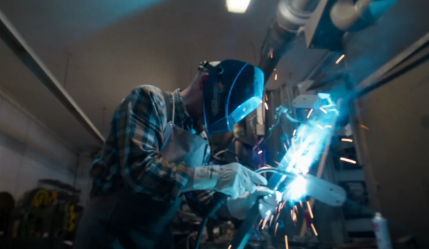
But maintaining those standards in welding operations required significant manual effort. Products like lecture hall stands and stage substructures demanded numerous welding steps, often with different templates and tools for each part. No two projects are alike. Components moved between stations multiple times. Each product typically requires two or three welders working in coordination.
Even with skilled workers, small variations occurred between welders and across shifts. These inconsistencies sometimes led to adjustments during assembly. The physical demands were considerable. Hours in welding positions, exposure to smoke, and arc light. Finding skilled welders willing to work in these conditions was becoming increasingly difficult.
Craftsmanship meets innovation
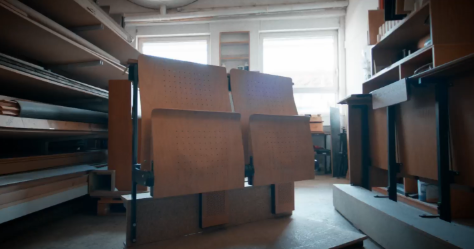
Schuster Bestuhlungen isn’t new to manufacturing challenges. For over 70 years, the Kaiserslautern-based company has specialized in lecture hall and auditorium seating for educational institutions across Germany. What sets them apart is their ability to handle complete projects: custom metalwork and precision woodworking, to upholstery and on-site installation.
This integrated approach gives them flexibility but also creates complexity. Every department needs to work in sync. When one area faces bottlenecks, it affects the entire operation.
A decade of innovation: The road to automation
Schuster Bestuhlungen’s path toward automation began over a decade ago with a CNC machining center for woodworking. That investment marked a turning point. What previously required multiple machines and operators now needed just one person. Other team members could focus on painting, upholstery, metalwork, or assembly. Precision improved dramatically. Drilling inaccuracies causing 2-3mm misalignments became history.
The lesson was clear: smart automation multiplies human capability rather than replacing it.
With that success in mind, Schuster Bestuhlungen explored welding automation. But most commercial solutions were built for large manufacturers with high-volume production and dedicated engineering teams. The questions were practical: Would it work for their custom projects? Would it handle the constant project variety?
Abicor Binzel understood these concerns. Rather than presentations and promises, they offered hands-on experience. Schuster Bestuhlungen tested the iBOTone® for two months in real production conditions. The team could evaluate it themselves, ask questions, and see results firsthand.
A smarter way to weld
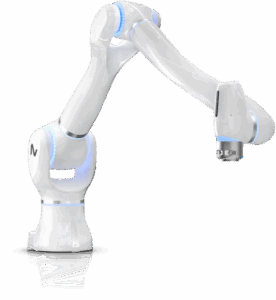
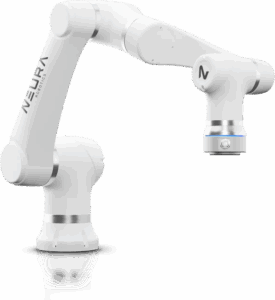
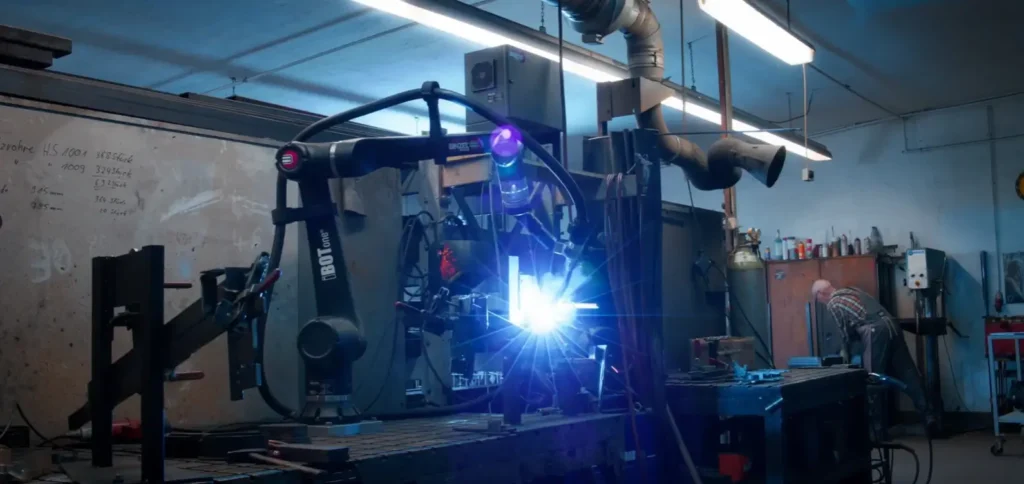
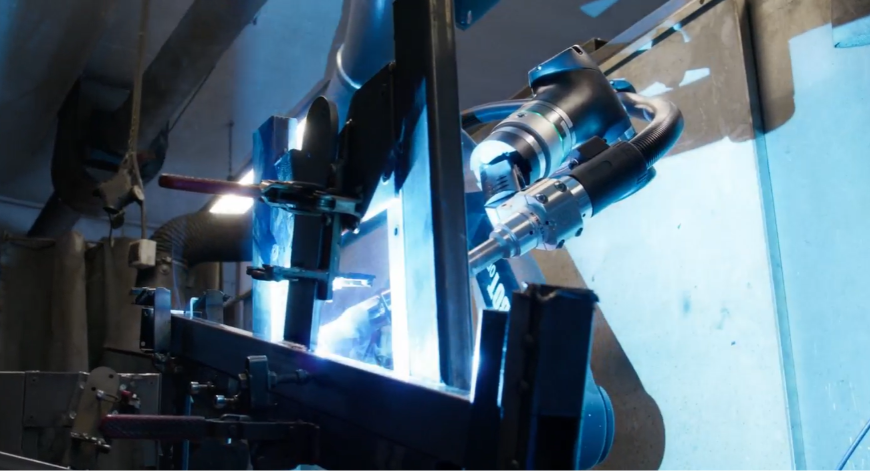
The iBOTone® is a collaborative welding robot that brings together NEURA Robotics’ advanced robot technology and Abicor Binzel’s deep welding expertise. Unlike traditional industrial robots that require safety cages and dedicated floor space, the iBOTone® works safely alongside human operators. Compact and flexible, it can be deployed wherever welding is needed. The goal was clear: make professional welding automation accessible to companies of any size.
What made it work was simplicity. With EasyTeach Mate, workers guide the welding cobot by hand, defining welding paths directly. No programming. No complex interfaces. Any trained worker can teach new parts in just minutes and operate the system.
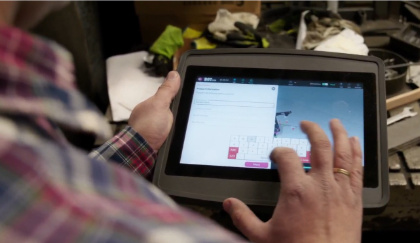
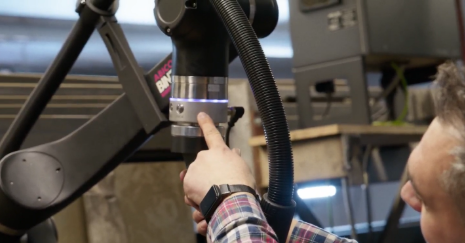
The speed of adoption surprised even Schuster Bestuhlungen. The team was up and running quickly, integrating the iBOTone® into production for components like seat rotation brackets, lecture hall stands, and steel substructures for stage platforms.
“The iBOTone® gives us the same flexibility and efficiency in welding that our CNC gave us years ago in woodworking. But now, anyone can weld. That is a real game changer for us.”
Ronal Schunn, General Manager, Schuster Bestuhlungen
Results: Smarter, faster, better
The implementation delivered measurable improvements across operations, finances, and workforce.
Production efficiency: Eliminating retooling and manual handling cut welding time per part significantly while increasing throughput. One worker manages the cobot while simultaneously handling other production tasks.
Quality consistency: Every weld became identical. No variations between operators or shifts. No rework. No assembly adjustments. Components fit perfectly every time.
Financial impact: The investment paid for itself in less than a year through higher output, lower operational costs, and eliminated waste.
Workplace environment: Workers spend significantly less time exposed to welding smoke and arc light. Physical strain decreased. The modern, technology-driven setup attracts younger workers who might have otherwise avoided traditional manufacturing roles entirely.
Redeploying talent: Schuster Bestuhlungen didn’t lose welders to automation. They redeployed skilled workers to on-site installation and adjustment, tasks requiring genuine human expertise and problem-solving. The company went from employing three to four in-house welders to operating more efficiently through strategic deployment rather than displacement.
Ongoing collaboration: Shaping the future together
The collaboration between Abicor Binzel and NEURA Robotics created something neither could have built alone. Abicor Binzel brought decades of welding knowledge and direct customer relationships. NEURA Robotics contributed advanced collaborative robot technology designed for intuitive use.
For Schuster Bestuhlungen, this partnership meant more than just buying equipment. It meant having two companies invested in their success, continuously improving the solution based on real production feedback.
“The cobot frees our workers from monotonous, physically demanding tasks so they can focus on work that requires real expertise. That’s better for everyone.”
Ronal Schunn, General Manager, Schuster Bestuhlungen
From tradition to transformation
For small and medium-sized manufacturers, the question isn’t whether to automate but how to do it intelligently. Schuster Bestuhlungen’s story demonstrates that advanced robotics can enhance craftsmanship rather than replace it. The right technology improves efficiency without sacrificing what makes a company successful. It supports employees instead of displacing them. It creates workplaces that attract younger talent while respecting the experience of longtime team members.
