
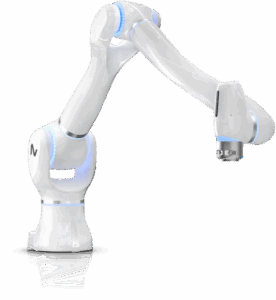


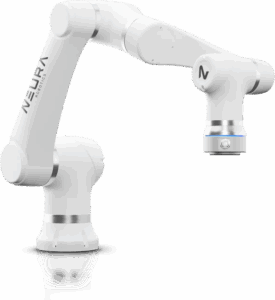



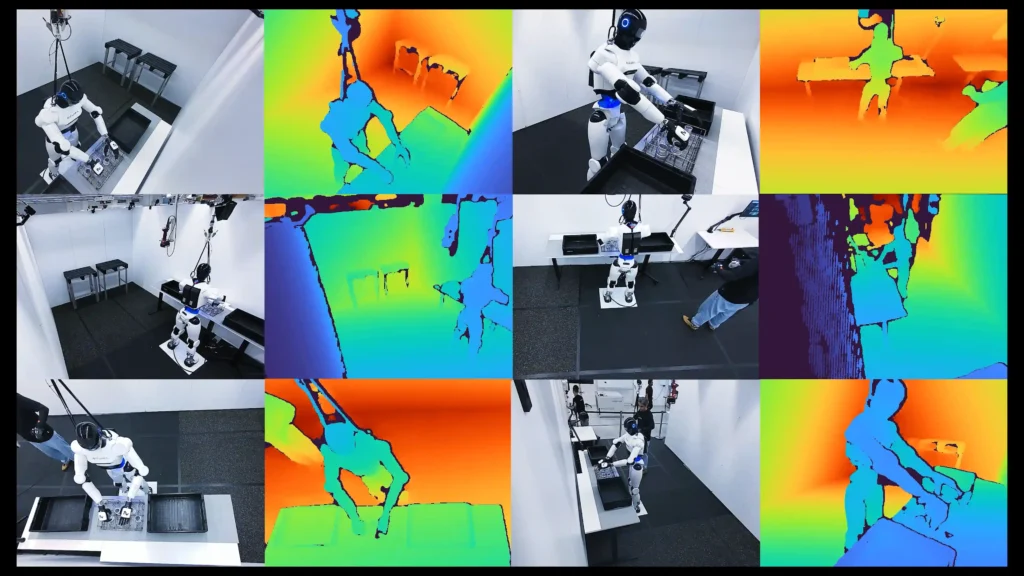
When a humanoid robot learns to sort parcels or assemble components, the data generated in the process is worth far more than a single training run and that immediately raises the question of who owns it. This is one reason why data sovereignty has long since arrived on the boardroom agenda in European companies, and the findings behind that shift are unambiguous: from hardware and AI through to operating systems, the majority of companies consider themselves largely or entirely dependent on technologies, innovations or services from outside the EU, as the DIHK Digitalization Survey 2026 of almost 5,000 companies shows.
Against this backdrop it comes as little surprise that data sovereignty has become a business criterion. Anyone looking to enter partnerships therefore needs to be able to offer sovereign solutions, and nowhere does this weigh more heavily than in cognitive robotics, which depends on collaboration and on jointly generated data.
The dilemma facing the robotics industry: the transparent shop floor
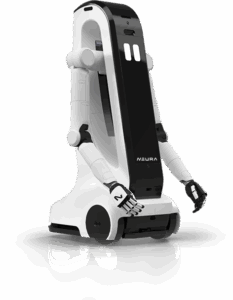
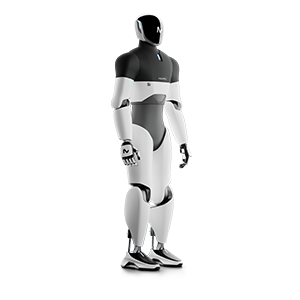
As soon as cognitive robots such as the cognitive MAiRA or the humanoid 4NE-1 are trained, many start asking who owns the data they generate. When an AI-driven robot learns to pick up a new workpiece, what emerges is not an arbitrary data set but intellectual property belonging to the manufacturing company, held in gripping strategies, tolerances, cycle times and failure patterns. It is precisely this learned knowledge that carries the real value.
In cognitive robotics the issue is amplified by the fact that a robot learns most effectively when it can draw on data from many real production environments. Those who contribute fear that they are handing over their know-how, while those who hold back will not build the necessary data base on their own. Without an exchange of data the AI remains weak, whereas an uncontrolled exchange dilutes the very store of knowledge that makes it valuable.
The question can therefore not be whether companies share data, but under which conditions they can do so without losing control of it.
What is data sovereignty?
The term is used in very different ways, which is why no generally accepted definition exists. At its core, data sovereignty describes control over your own data and over how that data is collected, stored and processed.
A company is accordingly data-sovereign when it can decide, without one-sided dependence on third parties, who collects its data, where that data resides and who may use it for which purpose. Sovereignty is primarily a question of control and only secondarily one of location. Location is not irrelevant nonetheless, because data is subject to the laws of the country in which it is generated and processed, and where it resides helps determine who can demand access in case of doubt.
Unlike data protection, data sovereignty applies to all data and therefore also to data without any personal reference, which means machine and sensor data, training data, process knowledge as well as models and what they have learned.
Drawing the line: digital sovereignty, data sovereignty and data security
The terms are frequently conflated in public debate. In fact, data sovereignty is one part of digital sovereignty. Where data sovereignty concerns the rights of use attached to data, digital sovereignty covers technological capability as a whole, from microchips through networks and operating systems to AI models. The former aims at self-determination over a company’s own body of information, the latter at avoiding monopolies and exposure to pressure in critical technology.
Beyond that, sovereignty should not be equated directly with security. IT security protects data against attackers, whereas data sovereignty describes the legal and technical self-determination over who may process that data in the first place.
| Concept | What it covers | Core question | Example |
|---|---|---|---|
| Digital sovereignty | Technological capability as a whole – chips, networks, operating systems, AI models | Can we act independently in critical technology? | Avoiding dependence on a single non-EU cloud or chip supplier |
| Data sovereignty | Rights of use and control over your own data, regardless of personal reference | Who may collect, store and use our data, where and for what purpose? | Gripping strategies and cycle times stay under the operator’s control |
| Data security | Technical protection of data against attackers and loss | Is the data protected against unauthorized access? | State-of-the-art encryption, access management, backups |
When is data sovereignty in place?
Part of the answer now comes from legislators, with the EU Data Act, applicable since September 2025, and the EU AI Act, whose high-risk obligations apply from August 2026. Data sovereignty accordingly rests on the interplay of several conditions:
- Legal clarity. Ownership and usage rights to the data are contractually unambiguous, so that it is recorded who may use which data for which purpose and who may not.
- Physical control. Processing takes place where the data owner controls it, which means on-device, on-premise or in an infrastructure of their own choosing.
- Purpose limitation and access control. It is defined in granular terms which role, which system and which partner accesses which data, when and for what.
- Territorial certainty. It is established in which jurisdiction data is stored and processed and which law therefore applies to it.
- Traceability. Data flows are logged and auditable, exactly as the EU AI Act requires for high-risk systems.
- Portability and erasability. Data can be exported, migrated and deleted without a provider standing in the way as gatekeeper.
- Separability without loss of function. Cooperation with a partner can be brought to an end without the ongoing operation breaking down.
Many provider environments meet data-location requirements and still do not give the customer sole control over the keys, which leaves the provider technically able to access the data. Anyone who wants to demonstrate these conditions rather than merely assert them has to anchor them in their own infrastructure.
Edge, hybrid or cloud: where sovereignty is decided technically
Three operating models are essentially available for this decision, and in practice they can be combined.
The public cloud offers the broadest functionality and the easiest path to scale, yet control over access and encryption remains with the provider for as long as the customer does not insist on managing the keys itself. With edge computing, data is processed where it arises, directly on the robot or within the factory, which keeps control entirely with the operator while limiting it to the computing power available locally and demanding more operational effort. Hybrid architectures combine the two by keeping sensitive processing local and moving only aggregated or anonymized data into a cloud whose jurisdiction has been chosen deliberately.
The Smart Limbs concept
In cognitive robotics this is precisely what NEURA puts into practice with its Smart Limbs concept, distributing sensing and compute across the robot so that decisions are taken where the data arises. Summarized, it allows the model quality that comes from joint training without releasing raw process knowledge from the plant.
Beyond the choice of operating model, several approaches have become established for securing sovereignty in technical terms, from key management held by the customer through to open standards and interfaces such as OPC UA that keep the environment replaceable.
The ecosystem decides data sovereignty
European competitiveness depends on this as well. Robotics ecosystems are emerging in the US and in China at high speed and with substantial capital, while in Europe it is factors such as industrial depth and process knowledge grown over decades that make the difference. That advantage only counts if such knowledge can be shared without being given away.
There is also an effect that is easily overlooked, since AI models improve with the data of their users, and anyone feeding European manufacturing data into non-European models is improving the algorithms of possible future competitors. Sovereignty therefore does not mean isolation but the ability to build genuine capability in critical areas and to remain able to act, while staying open to trade, investment and international cooperation.
Whether a provider is data-sovereign is therefore decided by the architecture of its ecosystem. For that reason NEURA thinks of Smart Limbs and Neuraverse as one connected architecture. Processing takes place where the data arises, with an ecosystem behind it that secures access rights technically rather than contractually.
